The problem

FOR far too long regarded as frivolous, a foolish and mindless pursuit of the inane and the trivial, fashion is the stepchild of culture and does not get the respect it deserves. The fact that it is an industry employing thousands and generating crores for the desi exchequer, including in foreign exchange, despite being ignored or worse, is probably part of what confounds the skeptics.
Fashion is among the most fascinating and eloquent of history’s markers. When flaunted by history’s anointed ones, reflective of how they came to characterize their epochs: Cleopatra, Elizabeth the First, Beau Brummell, Marie Antoinette – even if the last, especially, came to an unhappy end, her wardrobe a symbol of oppressive excess.
Fashion is devalued for a host of reasons, in part to do with its glossiness, its juggernaut presence and, its consequent, undeniable hold on the popular fancy. It is also derided, it must be said, for what are its perceived shortcomings. Or, rather, for what it is not and should not have to be.
It is labelled meretricious and flippant, a pastime for the superficial. The have-nots laugh at the must-haves, and it becomes all too easy to overlook the fact that, its sheer industrial stature apart, what fashion does is hold up a mirror to society, reflecting the mores and advancements of society’s constant churn and evolution. And the image isn’t necessarily flattering, which probably also has to do with its perceived shallowness.
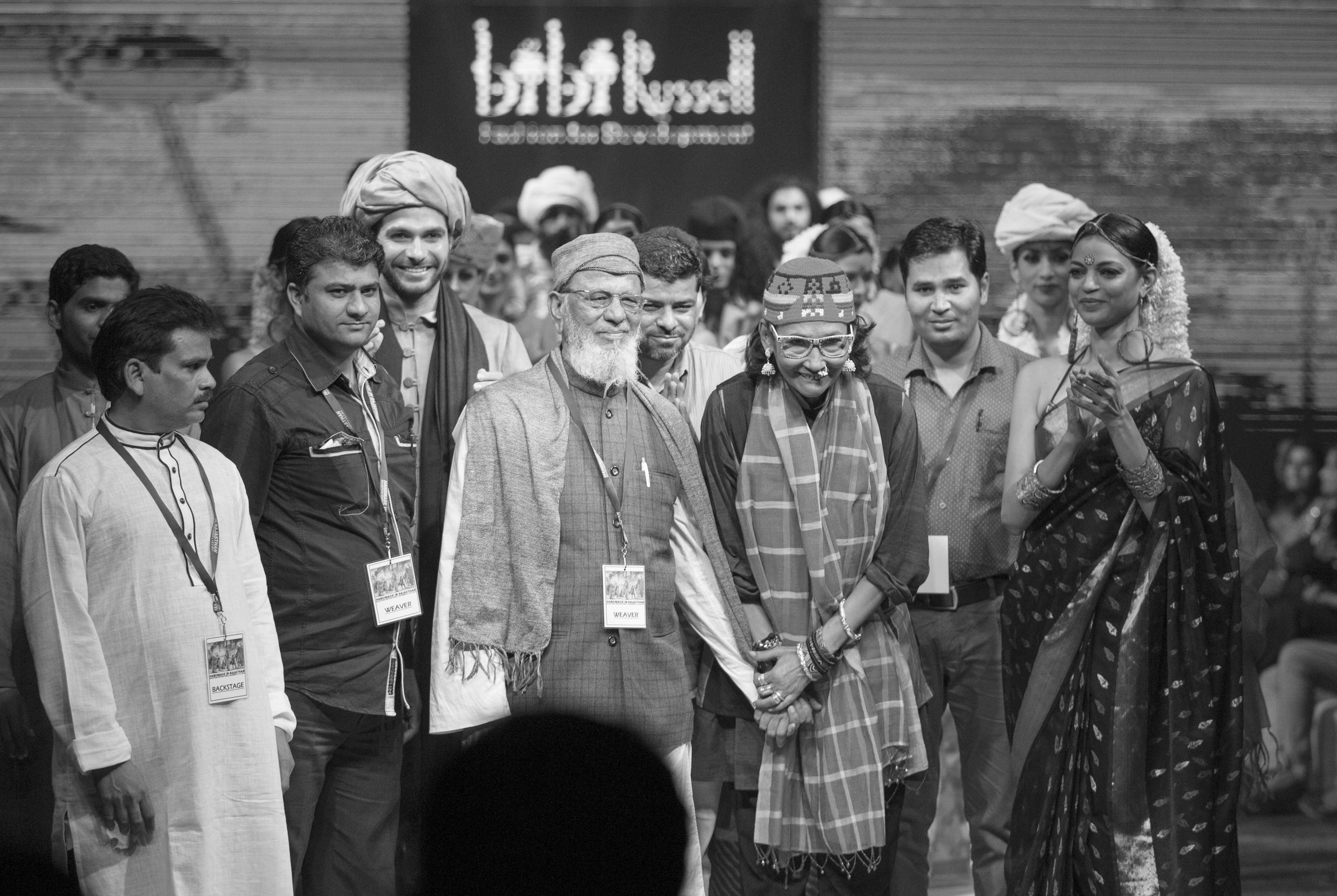
In India, a powerful emotional bond to textiles still informs our regard for, and approach to, clothing and fashion. Khadi was once the venerated metaphor, a banner for the freedom struggle, as millions exhorted by Mahatma Gandhi wore it as a symbol of protest. Today, there is a concerted move to sustain – and innovate upon – the creation and production of this heritage textile and its use for clothing and soft furnishing fabric. ‘Make in India’ is the current buzzword, but true luxury could soon be represented by khadi under the ‘Handmade in India’ label.
So, of course, fashion does have a currency, a metaphorical equation with history, and it is time that India researches and documents its various periods with accuracy and detail to set alongside the record that has been laid out by Bollywood and television. Life should not merely be reflected by artifice, fun as that might be.
This issue of Seminar draws upon writers whose work on fashion gives voice to its depth and nuances. The attempt is to distil Indian fashion in a collective comment that would sum up these millennial decades for researchers, historians and those curious about what the fuss could possibly have been about.
Balancing the ‘most respected’ voices against those somewhat ‘more representative’ of our demographically extensive youth brigade, differing viewpoints are presented, encapsulating seven decades of our Independence and the growth of Indian fashion. The voices are resonant with personal histories and shared experiences and needle-sharp observations – witty, serious, ironic, dry and insightful.